
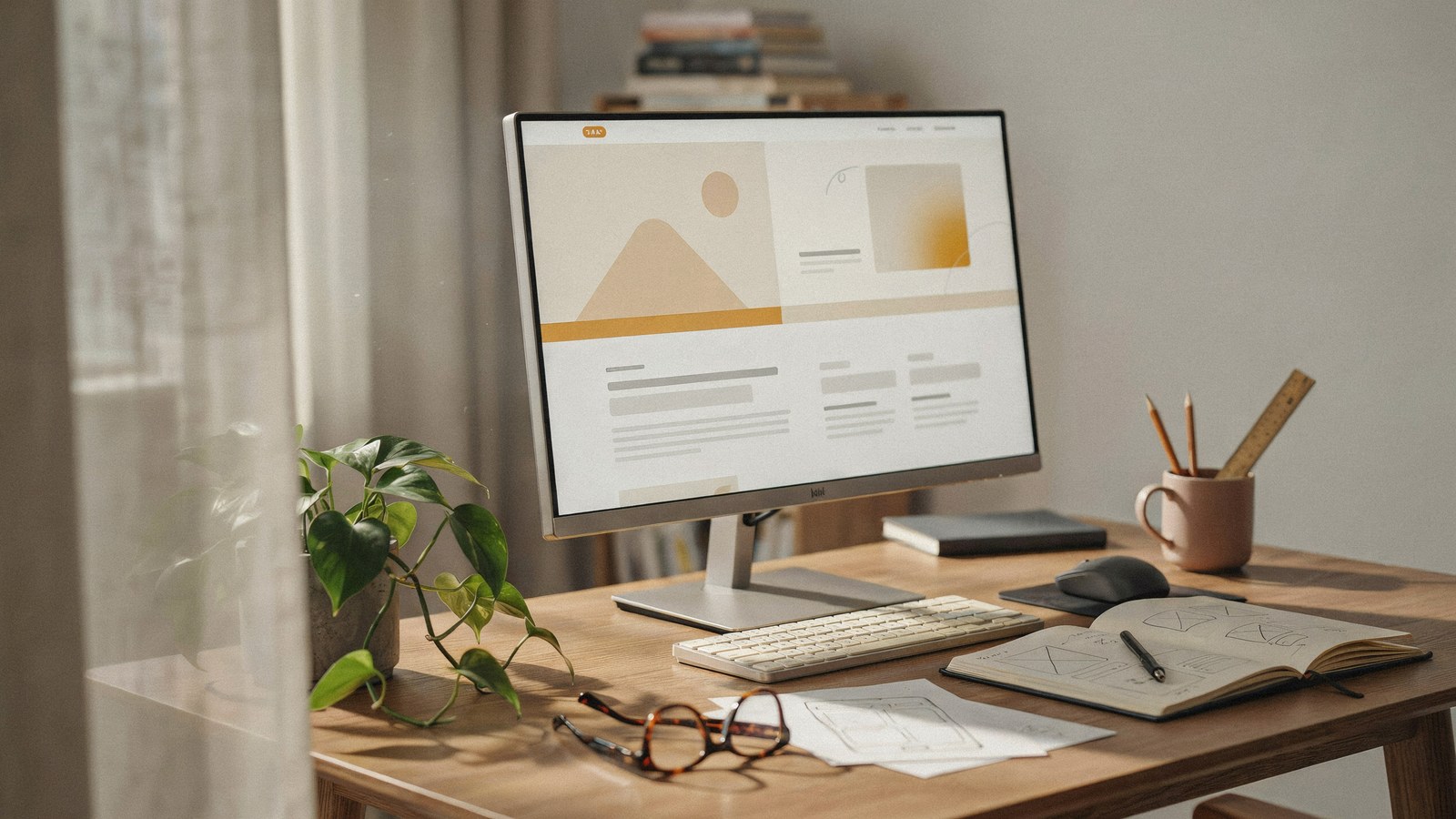
- Glassmorphism and layered transparency are replacing flat, solid-color UI in 2026.
- Dark mode is no longer optional; it's becoming the expected default for premium brands.
- Purposeful micro-animations increase user engagement and perceived quality without hurting performance.
- Bolder typography and fewer words per page are outperforming content-heavy designs.
Every year, design trends shift. Some are gimmicks that burn bright and disappear. Others represent genuine evolution in how people interact with screens and how businesses communicate credibility. In 2026, five specific movements are rising above the noise, and the smart business owners I talk to are already asking how to incorporate them.
I'll be straight with you: chasing trends for their own sake is a waste of money. But understanding what's working right now, and why, helps you make better decisions about your website and your brand. Here's what I'm seeing in the wild, and what it means for your business.
1. Glassmorphism: The Frosted Glass Effect Is Everywhere
If you've used macOS, iOS, or any modern SaaS app lately, you've already seen glassmorphism. It's the design technique that makes interface elements look like frosted glass: semi-transparent backgrounds, subtle blur, soft borders, and layered depth. What started as an Apple design language has spread to everything from fintech dashboards to restaurant websites.
The reason it works isn't just aesthetic. Frosted glass elements create visual hierarchy without adding clutter. They suggest refinement and intentionality, the visual equivalent of a well-tailored suit. For service businesses and creative agencies especially, glassmorphism signals premium quality at a glance.
Glassmorphism requires something interesting behind the frosted element to really shine. Pair it with gradient backgrounds, subtle textures, or rich photography, not plain white or gray.
2. Dark Mode as the Default, Not the Option
For years, dark mode was a toggle, a nice-to-have for people who work late. In 2026, that's changing. More premium brands are launching with dark as their primary experience, treating light mode as the alternative. The shift is partly practical (OLED screens make dark UIs look stunning) and partly cultural (dark equals premium in most design-savvy industries).
The data backs this up. Studies show that dark interfaces reduce eye strain, improve readability in low-light environments, and are increasingly associated with quality and sophistication by consumers. If your website still lives exclusively in a washed-out white world, it may be sending signals you don't intend.
That said, not every business should go dark. A children's toy store, a wedding photographer, or a bakery would likely do better with a warm, light palette. The lesson isn't "go dark"; it's "choose your default experience intentionally and design it to the highest standard."
3. Kinetic Typography: Words That Move With Purpose
Static headlines are giving way to text that breathes, slides, fades, and responds. Kinetic typography, animated text, is one of the most effective ways to create a memorable first impression without relying on complex graphics or video. Done right, a single animated headline can do the work of a hero video in a fraction of the page weight.
The key word is purpose. Animation for its own sake annoys people. But when motion reinforces your message, revealing words one at a time to build anticipation, or subtly shifting color to draw attention, it becomes a conversion tool, not just a visual trick.
Movement attracts attention. Purposeful movement keeps it. The difference between the two is the difference between a website that impresses and one that converts.
4. Bolder Layouts and Braver Typography
The era of playing it safe with 16px body text and thin, neutral fonts is over. In 2026, the sites that stand out are the ones making confident visual choices: oversized display type, unexpected font pairings, layouts that break the grid instead of adhering to it religiously.
This doesn't mean chaotic or unreadable. It means having a point of view. A law firm can use a strong serif that commands authority. A tech startup can use a geometric sans that communicates precision. The typography itself becomes part of the brand message, not just a container for words.
- Pair a display font with a workhorse body font: personality at the headline level, clarity at the content level.
- Size up your headings. If your H1 doesn't make people stop scrolling, it's not big enough.
- Embrace whitespace. Saying less on each page, but saying it louder, outperforms walls of text every time.
- Let your font carry emotion. Rounded, friendly typefaces feel approachable. Sharp, geometric ones feel precise and modern. Choose deliberately.
5. Micro-Interactions: The Details That Separate Good from Great
Micro-interactions are the small animations and feedback moments that happen when you hover a button, click a link, submit a form, or scroll past an element. By themselves, each one is subtle. Together, they create an experience that feels alive, responsive, and premium, versus one that feels static and cheap.
Think about what happens when you hover over a button on a well-designed site: it lifts slightly, the color shifts, maybe there's a subtle shadow change. None of that is necessary for the button to function. All of it is necessary for the button to feel satisfying to click. That feeling of quality is what makes visitors trust you with their email address, phone number, or credit card.
Always implement the prefers-reduced-motion media query for users with vestibular disorders or motion sensitivity. Good animation is inclusive animation.
How to Use These Trends Without Getting Burned
Trends are tools, not mandates. Before implementing any of these, ask yourself: does this serve my customers, or just impress them? Glassmorphism on a law firm's site might signal sophistication. On a plumber's emergency contact page, it might just slow down someone who needs help fast.
The best websites in 2026 won't be the ones that implemented every trend. They'll be the ones that made every decision with intention: understanding their audience, their message, and their competitive position, and using design to communicate all three clearly. If you're not sure where your site stands, that's worth a conversation.