

- A standard brochure website and a lead generation website look similar on the surface, but their intent is completely different.
- Businesses that replace passive websites with lead-focused ones see an average 55% revenue increase within 12 months of launch.
- Five specific elements, a clear offer, a capture mechanism, social proof, speed, and a follow-up system, separate high-converting sites from the rest.
- You don't need a massive traffic increase to dramatically improve results. Converting 3% of existing visitors instead of 1% triples your leads with zero ad spend.
Picture a contractor with twenty years of experience and a reputation that practically sells itself. He's never had to advertise; referrals have kept his schedule full. But the referrals started slowing down, so a friend told him he needed a website. He paid someone to build one. It looked fine. Professional, even.
Eighteen months later, he couldn't point to a single customer who had come from it.
That story isn't unusual. Across every industry, contractors, attorneys, CPAs, consultants, service providers of all kinds, the same pattern repeats itself. A business owner pays to "get a website," gets something that looks professional enough, and then waits for the phone to ring. Sometimes it does. Almost never from the website.
There's a name for what most small businesses have: a brochure website. And there's a name for what they actually need: a lead generation website. These two things are not the same, and the difference between them is measured directly in revenue.
What's the Actual Difference?
A brochure website answers the question, "What do you do?" It lists your services, tells your story, maybe shows some photos. It's informational. The visitor reads it, nods, and, in the absence of anything prompting them to act, leaves and Googles your competitor.
A lead generation website answers a different question: "What should I do next?" Every page, every section, every piece of copy is engineered toward a single outcome: getting the visitor to take action. That action might be submitting a contact form, calling a phone number, claiming a free offer, or booking a consultation. The format changes by industry. The intent never does.
A brochure website markets your business. A lead generation website sells it. One creates awareness. The other creates revenue.
This distinction matters enormously because most business owners evaluate their websites on the wrong criteria. They ask: "Does it look good? Does it load fast? Is it on the first page of Google?" Those things matter. But none of them mean anything if the visitor hits your homepage and has no idea what you want them to do.
The Numbers Behind the 55% Figure
Let's put some concrete math behind why this matters. According to data from HubSpot's annual State of Marketing report, companies with optimized lead capture on their websites generate 55% more leads than those without. That stat is frequently cited as a revenue figure because leads and revenue are directly correlated: more leads flowing into a functioning follow-up system means more customers, full stop.
But here's what makes the math even more compelling for a small business: you don't need more traffic to see the benefit. You need better conversion.
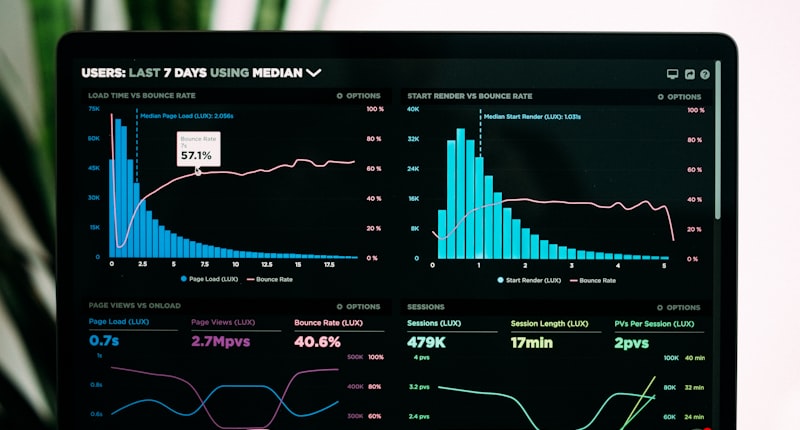
Here's a simple example. Say your website gets 500 visitors a month. At a 1% conversion rate, which is typical for a passive brochure site, that's 5 leads per month. At a 3% conversion rate, achievable with a properly built lead generation site, that's 15 leads per month from the same traffic. Triple the leads. Zero additional ad spend.
If your average client is worth $2,000 and you close 30% of your leads, that 1% conversion rate produces about $3,000/month in new business. A 3% conversion rate from the same traffic produces $9,000/month. The difference isn't magic; it's architecture.
Most brochure websites convert between 0.5% to 1.5% of visitors into leads. A well-built lead generation website targeting the same audience typically achieves 2.5% to 5%. That delta is worth tens of thousands of dollars annually for a typical small business, without spending a dime more on traffic.
The Five Elements That Separate Them
After working with small businesses across a range of industries, I've found that high-converting lead generation websites share five characteristics that brochure sites almost universally lack. These aren't design preferences; they're structural features that directly drive conversions.
1. A Clear, Irresistible Offer
The most important question your homepage needs to answer isn't "who are you?", it's "what do I get?" Visitors need a reason to act right now, not "sometime when I'm ready." The offer creates urgency and perceived value.
Think about the difference between a roofing company whose homepage says "Contact Us for a Quote" versus one whose homepage says "Get a Free Roof Inspection, No Obligation." Same service. Completely different intent. The second offer gives the visitor something concrete to claim. A no-cost inspection isn't a vague promise; it's a deliverable with real value. That kind of offer converts. A generic contact button does not.
The same logic applies in every industry. An attorney who offers a free 20-minute case review. A CPA who offers a free tax liability analysis. A landscaper who offers a free property assessment and design concept. The format is always specific, always low-risk for the visitor, and always directly related to what they're already trying to solve.
2. A Friction-Free Capture Mechanism
Your offer is worthless if claiming it requires effort. Every field you add to a contact form reduces submissions. Every extra click between a visitor and your call to action costs you leads. The form needs to be prominent, above the fold on mobile, and ask for only what you absolutely need to follow up: name, phone number, and email. That's it.
The form should also confirm submission immediately: a visible success message or a redirect to a thank-you page. Visitors who submit a form and see nothing happen assume it didn't work, and they never become customers.
3. Social Proof, Placed Strategically
Nobody wants to be the first person to trust you. Social proof, customer reviews, star ratings, testimonials, before-and-after photos, logos of past clients, gives visitors the evidence they need to lower their guard and act. The key word is strategic. Social proof works best when it's placed directly adjacent to your call to action, not buried in an "About Us" page that nobody reads.

Imagine a service business with dozens of five-star reviews, but every single one of them lives on a Google listing that most website visitors never see. Moving that social proof onto the homepage, directly above the contact form, means the prospect reads the reviews at the exact moment they're deciding whether to reach out. The placement isn't accidental. It's calculated. Trust is built right where the decision is made.
4. Mobile Speed, Not Just Mobile Compatibility
Google's data shows that 53% of mobile users abandon a site that takes more than 3 seconds to load. Most small business websites built on bloated page builders load in 6 to 8 seconds on mobile. That means you're losing more than half your mobile visitors before they ever see your offer.
A lead generation website isn't just mobile-friendly; it's fast. Images are compressed. Code is lean. Fonts load efficiently. The result is a site that feels instant on a phone, because the customer who is searching on the go, between appointments, standing in a parking lot, dealing with an urgent problem, needs to find you immediately and take action immediately. Every second of load time is another second for doubt to creep in, or for a competitor's faster site to get the tap instead.
5. A Follow-Up System, Not Just a Form
Here's where most well-intentioned lead generation websites fall apart. You build the form. Leads come in. They sit in your inbox. You get busy. Three days pass. You email the lead. They've already hired someone else.
A complete lead generation system connects your website to a CRM (Customer Relationship Management software) that logs every lead the moment it arrives, sends an automatic acknowledgment email so the prospect knows their submission was received, and creates a task or notification for you to follow up within hours, not days. Every form submission flows directly into a queue, triggering an automated confirmation and keeping the lead warm until you can call them back. The website doesn't just capture the lead; it starts the relationship.
Research from Lead Response Management found that the odds of qualifying a lead drop by over 80% if you wait longer than 5 minutes to respond. A CRM integration doesn't just organize your leads; it helps you win them before your competitor even sees the inquiry.
What This Looks Like in Practice
Take a hypothetical service business, let's say an HVAC company that's been around for fifteen years, has excellent reviews, and relies almost entirely on seasonal referrals and repeat customers. Their existing website lists their services and has a phone number in the header. That's it.
A lead generation rebuild changes the entire structure. The homepage opens with a specific, urgent offer: a free system efficiency check before summer. Reviews from real customers appear directly above the form. The form itself asks for three fields: name, phone, and the best time to call. On mobile, the whole experience loads in under two seconds. Every submission triggers an immediate confirmation text to the homeowner and a CRM notification to the office.
The company didn't change their service. They didn't run new ads. They didn't hire a salesperson. The website started doing the work their old one never could: converting curious visitors into booked appointments around the clock, even when the office is closed.
The best lead generation website isn't the flashiest one; it's the one that makes it embarrassingly easy for the right customer to say yes.
Is Your Website a Brochure or a Revenue Engine?
Here's an honest self-assessment you can do right now. Pull up your website on your phone. Ask yourself four questions:
- Within 5 seconds, is it absolutely clear what you're offering and who it's for?
- Is there a specific, compelling reason for a visitor to contact you today, not "sometime"?
- Is the path from "interested visitor" to "submitted contact" obvious, immediate, and low-friction?
- When a lead comes in, does something automatically happen, or does it sit in your inbox waiting for you to notice it?
If you answered "no" to any of those, and especially if you answered "no" to all four, your website is a brochure. It might be a very pretty brochure with great SEO. It's still leaving a significant amount of money on the table every single month.
The good news is that converting a brochure website into a lead generation machine isn't a year-long project. The core changes, a refined offer, a simplified form, strategic social proof placement, mobile speed improvements, and CRM integration, can be implemented methodically and start producing results within weeks of launch.
Your competitors are still relying on word of mouth, generic contact pages, and slow follow-up. That gap won't stay open forever.