
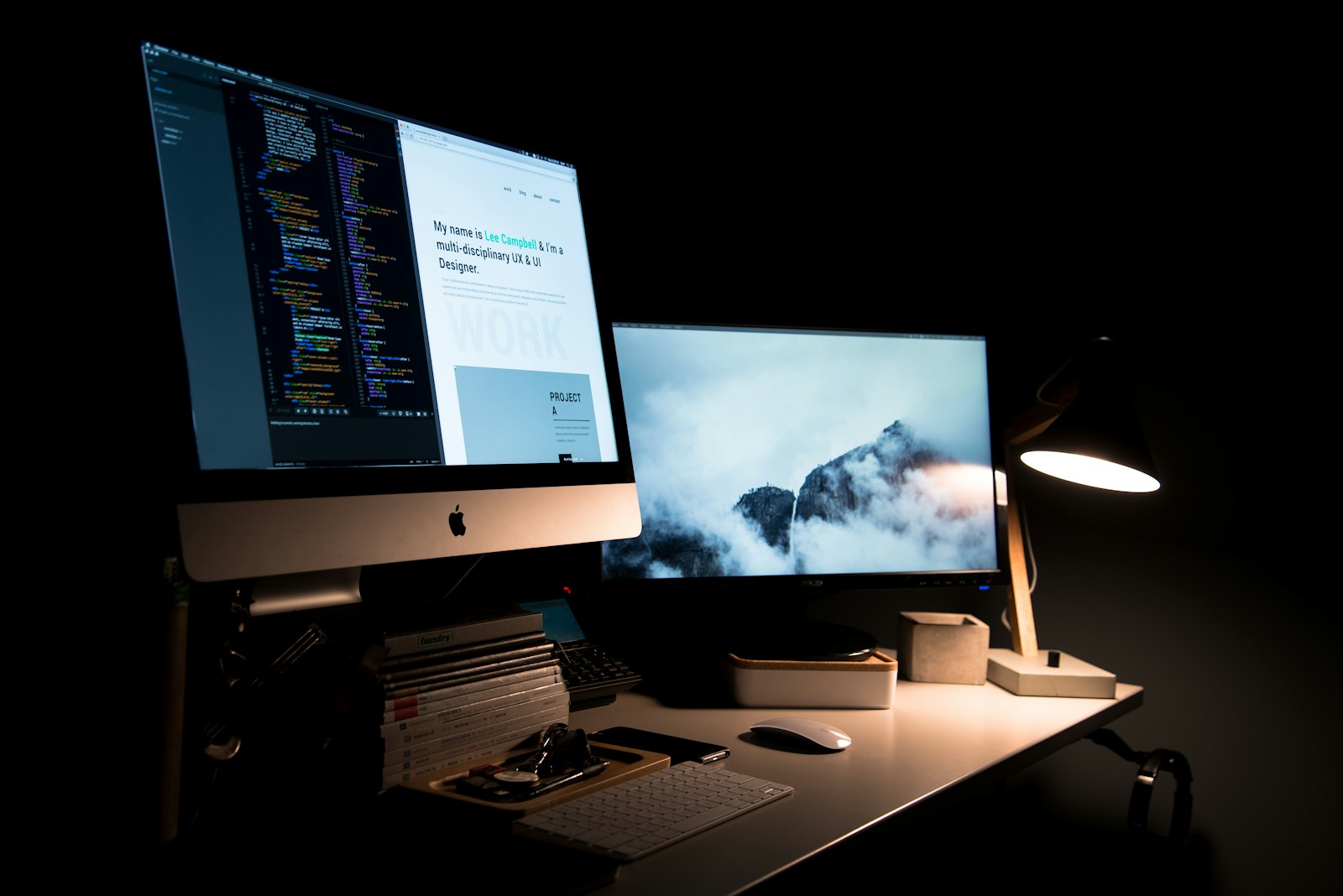
- 75% of consumers judge a business's credibility based on its website design, before reading a single word.
- Social media pages are rented land. Your website is the only digital asset you actually own.
- A professional website works 24/7 as your best salesperson, qualifying leads while you sleep.
- The cost of not having a professional website is invisible, but it's real and it's compounding.
I hear it regularly: "We're doing fine on Facebook" or "We mostly get business from referrals, so we don't really need a website." I understand the logic. If things are working, why fix them?
Here's the thing: you can't see the customers you're not getting. The people who found your competitor's polished website and called them instead of you. The referrals who looked you up first, weren't impressed, and quietly decided to go elsewhere. The potential clients who would have hired you if only they could find you. That invisible cost is real, and in most markets, it grows every year.
Your Website Is Your First Impression, and You Don't Get to Be There
Stanford University research has found that 75% of consumers admit to judging a business's credibility based on its website design. Not its pricing. Not its reviews. Its website design. Before a prospective customer reads your about page or your service descriptions, their brain has already made a judgment: professional or amateur, trustworthy or risky, worth contacting or not.
And here's the part that makes it harder: you're not there when it happens. When someone visits your website at 9pm on a Tuesday after seeing your business card, it's not you they're evaluating; it's the website. If the website looks cheap, outdated, or neglected, that's what they conclude about your business. Right or wrong. Fair or unfair. That's how it works.
A professional website is the version of you that shows up for every single visit: at 9pm on Tuesday, at 2am on a Sunday, in the moment when a prospect is comparing you to three competitors. It needs to represent you at your best, because it's doing the job of your best first impression over and over, indefinitely.
You wouldn't show up to a sales meeting in a wrinkled shirt and no business card. Your website is that meeting, happening thousands of times a year without you in the room.
The "We Use Social Media" Misconception
A Facebook business page is not a website. A strong Instagram presence is not a website. These are useful tools (I'm not dismissing them), but they are fundamentally different things with fundamentally different limitations.
- You don't own your audience. Facebook can change its algorithm tomorrow and cut your organic reach to 2%. Instagram can suspend your account for any reason or no reason. Your email list, your website, your domain: these you own. Social platforms can be taken away at any time.
- You can't control the experience. On a social platform, your content competes with ads, notifications, other posts, and every other distraction the platform has engineered to keep people scrolling. Your website gives visitors a focused, controlled environment built entirely around your message and your call to action.
- Social media doesn't rank in Google search. When someone searches "electrician near me" or "web designer Reno Nevada," they're not finding your Instagram page. They're finding websites: specifically, websites that have been built and maintained with search visibility in mind.
- It signals commitment. A business with only a social media page signals that it may not be around long-term, may not be serious, or may not have invested in its own infrastructure. Right or wrong, that's the inference many consumers draw.
The goal isn't to choose between a website and social media; it's to use both for what they're each best at. Social media builds awareness and community. Your website converts that awareness into leads, appointments, and customers. Without the website, you're doing the awareness work without the conversion infrastructure.
A Professional Website Works While You Sleep
One of the most undervalued things about a well-built website is that it's always on. It answers questions, presents your portfolio, handles contact form submissions, and pre-qualifies leads, 24 hours a day, 7 days a week, whether you're working, sleeping, or on vacation.
Think about the last time someone asked you "do you have a website?" after you handed them a card or gave them your number. That question is a buying signal. They're interested. They want to know more before they commit to a call. If your answer is "just Facebook," a percentage of those people will go find someone with a real website instead. Not all of them. But some. And some, over months and years, is a lot of lost revenue.
What "Professional" Actually Means
I want to be specific here because "professional website" gets thrown around loosely. A professional website is not just one that looks good. It's one that:
- Loads fast: under 3 seconds on mobile, ideally under 2
- Works on every device: mobile, tablet, desktop, all screen sizes
- Is secure: HTTPS/SSL, no warnings in browsers
- Has clear calls to action: it's obvious what the visitor should do next
- Is findable in search: basic on-page SEO, your location, your services
- Accurately represents your quality: the design signals the level of work you do
An outdated, slow, or poorly designed website can actually hurt your credibility more than not having one. If your website looks like it was built in 2012 and never touched since, it signals neglect, and neglect signals that the same might be true of how you treat customers. If you can't invest in your own digital presence, will you invest in theirs?
The Real Question: What Is It Costing You Not to Have One?
When business owners ask "is a professional website worth the cost?" they're asking the wrong question. The right question is: what is it costing me every month that I don't have one?
If you're in a competitive local market and losing even two or three potential clients per month to competitors with better web presences, what's that worth over a year? Over three years? Professional website projects from agencies like ours are investments with calculable returns, not expenses that cost you money, but assets that make you money.
The businesses I see winning in competitive local markets in 2026 have all made the same decision: they invested in being found, being credible, and being easy to hire. That decision starts with a professional website built to do all three.